
What does it take for a state to release an imprisoned journalist? Experiences from several cases point to the same thing: international awareness is not enough. There must also be a compelling reason for the state to say yes.
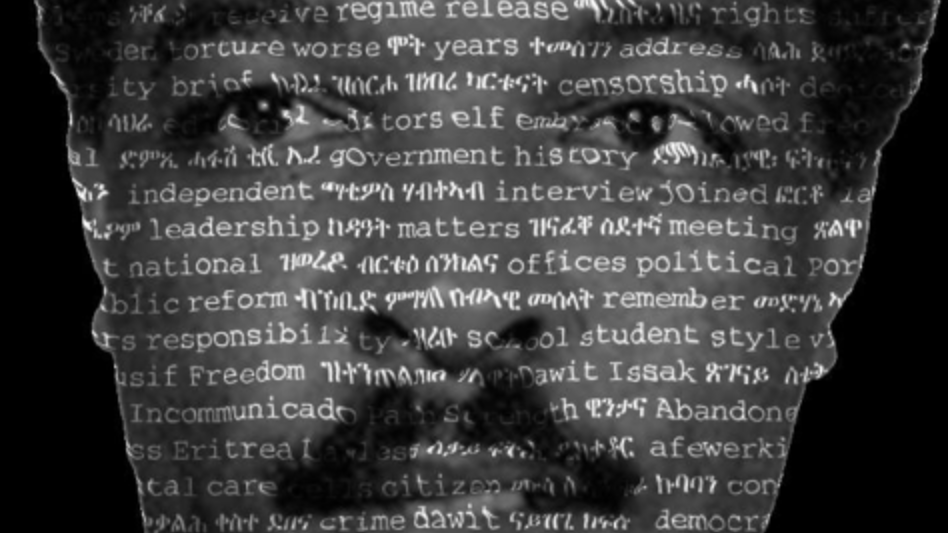
It is an afternoon in September when Betlehem Isaak and Abie Sium sit next to each other in a panel discussion organized by Reporters Without Borders in Stockholm. Their fathers, journalists Dawit Isaak and Seyoum Tsehaye, have been imprisoned in Eritrea since 2001.
– I believe they are alive, and as long as there is a chance, we will not stay silent, says Betlehem Isaak.
But what does it actually take for a journalist to be released?
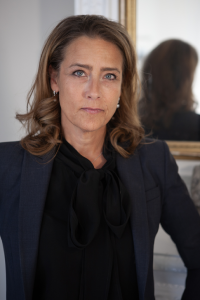
Caroline Edelstam is the chair of the Harald Edelstam Foundation, an organization that works with advocacy, awareness raising, education, and research in human rights. She emphasizes that release is primarily about incentives.
– For a state to release a person, there must be a reason to do so. That reason can be economic, political, or legal, she says.
Wall Street Journal journalist Evan Gershkovich was arrested in Russia in 2023 and sentenced to 16 years in prison for espionage—charges that both he and his employer rejected. In August 2024, he was freed in a prisoner swap.
Reuters journalists Wa Lone and Kyaw Soe Oo were arrested in Myanmar in 2017 while reporting on the military’s killings of Rohingya people. They were sentenced to seven years in prison but were pardoned and released after 511 days.
Martin Schibbye and Johan Persson were arrested in Ethiopia in 2011 and sentenced to 11 years in prison. After 14 months, they were released through a pardon following Swedish diplomatic efforts and a presidential pardon application submitted by the journalists themselves.
A completely different resistance was met in the case of Swedish publisher Gui Minhai, who was abducted/arrested in 2015 and sentenced to ten years in prison in China. Despite Swedish demands for his release, China has refused to yield.
According to the Committee to Protect Journalists (CPJ), 330 journalists were imprisoned worldwide because of their work as of December 2025. That same year, CPJ documented the release of 116 journalists.
– If Sweden and the international community repeatedly state that arbitrary detentions are unacceptable, yet accept that these demands are ignored without consequences, our own credibility is eroded, says Caroline Edelstam.
More Than Just Media Attention
According to the report How to Enhance Swedish Advocacy Mechanisms for Citizens Arbitrarily Detained or Missing Abroad, Sweden’s current advocacy efforts often lack the leverage required to alter the power dynamic.
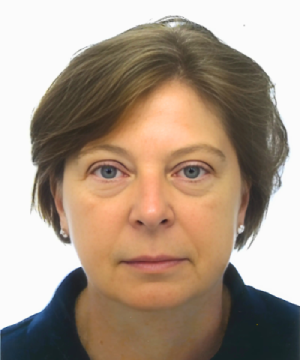
One of the report’s co-authors is Susanne Berger, a historian and senior research fellow at the Raoul Wallenberg Centre for Human Rights and founder of the Raoul Wallenberg Research Initiative. She points out that while international attention played a role in successful releases, more is needed.
– In Dawit Isaak’s case, international engagement has been extensive. But after a quarter of a century, one must ask the uncomfortable question: what actual leverage has been created, and what leverage has actually been used?, says Susanne Berger.
She argues that the key takeaway from past cases is that international pressure only works if it alters the detaining state’s cost-benefit calculation.
For Sweden, Susanne Berger highlights several potential tools: targeted sanctions, travel and visa bans, frozen assets, and assertive diplomatic measures – alongside mobilizing partner states and leveraging Sweden’s influence within the EU, the UN, and other international organizations.
– Sweden has more tools than mere dialogue. It is about using them to create real leverage through strong international pressure. The state must therefore make securing the release an early political priority, says Susanne Berger.
Within the EU, discussions are currently underway about whether to ”reset relations” with China and what conditions the EU should impose regarding trade issues. EU Member of Parliament Jonas Sjöstedt (Left Party) argues that human rights must be factored in:
– The EU should demand the release of Gui Minhai before signing any new agreements with China, he tells Global Bar Magazine.
Possible Paths Forward
Berger and Edelstam identify several potential pathways toward release in cases like Dawit Isaak’s. These include pardon applications, establishing a clearer role for families, and providing more regular updates on the state’s efforts behind the scenes.
They also call for clearer state responsibility, particularly for dual citizens. Furthermore, Berger and Edelstam argue that one cannot simply wait for a regime change in Eritrea.
– If the goal is to set Dawit Isaak free, ways must be found to bring Eritrea to the negotiating table, even when the country refuses to cooperate or acknowledge Dawit Isaak’s Swedish citizenship, Susanne Berger emphasizes.
Edelstam also highlights the need for a dedicated state mechanism to act swiftly whenever a journalist is detained abroad. She points to the United States’ Levinson Act and Canada’s similar Initiative Against Arbitrary Detention in State-to-State Relations.
– For Sweden, this requires political willpower backed by a sharper mandate, effective inter-agency coordination, and the capability to rapidly mobilize expertise when a crisis hits, says Caroline Edelstam.
Betlehem Isaak agrees with Berger and Edelstam that stronger pressure is the key to securing her father’s release from an Eritrean prison after 25 years.
– I believe it is possible to get him out, but it will require a much tougher stance against Eritrea, she says.
Rebecka Breisand
Read also
|
Uppläsning av artikel
|

