
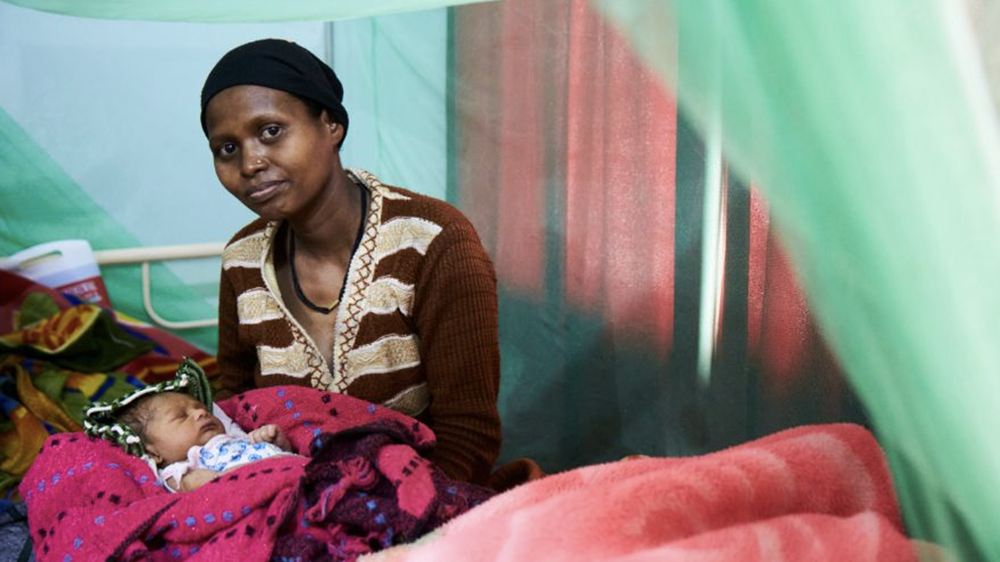
OPINION. Climate change is increasingly threatening the health and survival of pregnant women and newborns. The COP31 failure will now be passed on newborns, writes Anna Frellsen from Maternity Foundation.
The opinions expressed in the article are those by the author.
Climate change is increasingly threatening the health and survival of pregnant women and newborns. Research has found that heatwaves raise the odds of early birth by 26%, while extreme heat in the first half of pregnancy is associated with more than 50% higher odds of pre-eclampsia, a dangerous rise in blood pressure that can lead to seizures, organ damage and death. Droughts, floods and other climate shocks deepen food insecurity, cut access to clean water and disrupt health services. These are not abstract environmental risks: they can shape the course of a pregnancy and the health of both mother and child.
COP31 in Antalya closed on Sunday without an agreement, after a coalition of countries, including the EU and small island states, refused to accept a text that oil-producing states wanted watered down. Signing a weaker deal would have been easy. Holding out was harder. Even so, health secured a standalone paragraph in the draft political decision. An earlier version named maternal health among the ways climate change is already harming people. By the final draft, that had been cut back to a single line on ”physical and mental health”, and maternal health had been removed.

Unfinished business now passes to COP32 in Addis Ababa next November, and the case for mothers and newborns will need to be made, again. The stakes are high. Complications of preterm birth remain one of the leading causes of death in children under five. Climate change does not create these risks, but it makes them more likely and more severe, while making it harder for women to reach care. Meanwhile, it is the countries least responsible for climate change that are facing some of its greatest impact. Women in low- and lower-middle-income countries accounted for more than 90% of maternal deaths in 2023, and over 90% of extremely premature babies in low-income countries die within days, compared with fewer than 10% in high-income countries.
Some of the most remarkable people I have met work in the world’s most climate-vulnerable communities. In Ethiopia’s Afar region, one of the hottest inhabited places on Earth, midwife Kemal Hassan works where recurring drought is worsening maternal malnutrition. Malnourished mothers are often anaemic, which makes heavy bleeding after birth far more dangerous, and Kemal’s training means he knows how to prevent and manage it. In Gambella, midwife Nicola Zewga cares for women in a refugee camp where temperatures exceed 40°C, increasing the risks of dehydration and premature birth. Headaches, swelling and dizziness can signal heat stress or pre-eclampsia, and her training helps her tell the two apart. For Kemal and Nicola, climate change is not a warning of what may come but an everyday reality.
A policy does not provide care
But we should not mistake their commitment for adequacy. Many midwives have never been trained in how climate-related risks affect mothers and newborns, or how to adapt care in response. When a woman arrives in labour during a heatwave, or a newborn needs help to take its first breath, it is not a policy that provides care. It is a midwife.
The COP31 draft contained no new health funding commitments, and an analysis by the think tank adelphi found that only 2% of adaptation finance from multilateral climate funds has gone to health since 2004. Governments must start treating maternal and newborn health as a core part of climate adaptation, and fund it accordingly. Investing in midwives is one of the most effective places to start. Evidence shows that midwives improve the quality of care and reduce unnecessary medical interventions. If scaled up to reach every woman who needs them, midwife-led care could help avert roughly two thirds of maternal and newborn deaths.
Every euro invested in seawalls, drought-resistant crops and solar grids is an investment in resilience. But a health system is only as resilient as the people working in it. Next year, the climate talks move to a country where midwives like Kemal and Nicola live with the effects of a warming world every day. As the first least developed country to host a COP, Ethiopia has the standing to insist that mothers and newborns are written back into the text. COP32 should be the summit where adaptation finance finally reaches the delivery room. Until it does, the women and newborns most exposed to climate change will be the last to be protected.
Anna Frellsen
CEO of Maternity Foundation, a Danish non-profit working to make childbirth safer for women and newborns in low-resource and fragile settings. Since joining in 2013, she has led the global scale-up of the Safe Delivery App, which has now reached more than 600,000 healthcare professionals worldwide.
Read also
|
Uppläsning av artikel
|

