
OPINION. In a time of threatened health security, unequal access to vaccines and reduced global funding, the Nordic region faces a choice: to lead jointly and thereby strengthen the opportunities for the Nordic life science industry – or to become vulnerable, writes Jerome Kim, Director-General of the International Vaccine Institute (IVI), and Anders Nordström, Sweden’s former ambassador for global health.
The opinions expressed in the article are those by the authors.
When Canada’s Prime Minister Mark Carney recently warned that middle powers risk ending up “on the menu” if they do not act together, he was speaking about geopolitics. But his message is just as relevant to global health. At a time of threatened health security, unequal access to vaccines, and declining global financing, the Nordic countries face a crossroads: lead together—and in doing so create stronger opportunities for the Nordic life science industry—or become vulnerable.
Pandemics and other health threats do not negotiate. They do not respect national borders, political systems, or communities of values. Yet access to our most important weapon—vaccines—remains deeply unequal, while financing for global health is becoming increasingly fragmented. Countries that fail to act collectively therefore risk not only marginalization, but direct vulnerability.
For the Nordic countries, this is a defining choice.
The old model of global health, in which a small number of major donors and manufacturers carried the main responsibility, is breaking down. At the same time, threats are growing: new pandemics, antimicrobial resistance, climate-driven diseases, and increasingly fragile supply chains. Protracted armed conflicts amplify both vulnerabilities and risks. The question is not whether the Nordic region has the capacity to contribute. The question is whether we choose to lead together.
Sweden has partly made its choice.
When the International Vaccine Institute (IVI) established its European office in Stockholm in 2022, it was not a symbolic gesture but a strategic decision rooted in Nordic core values: equity, trust in science, and long-term global responsibility. Sweden recognized the critical link between access to vaccines and shared responsibility.
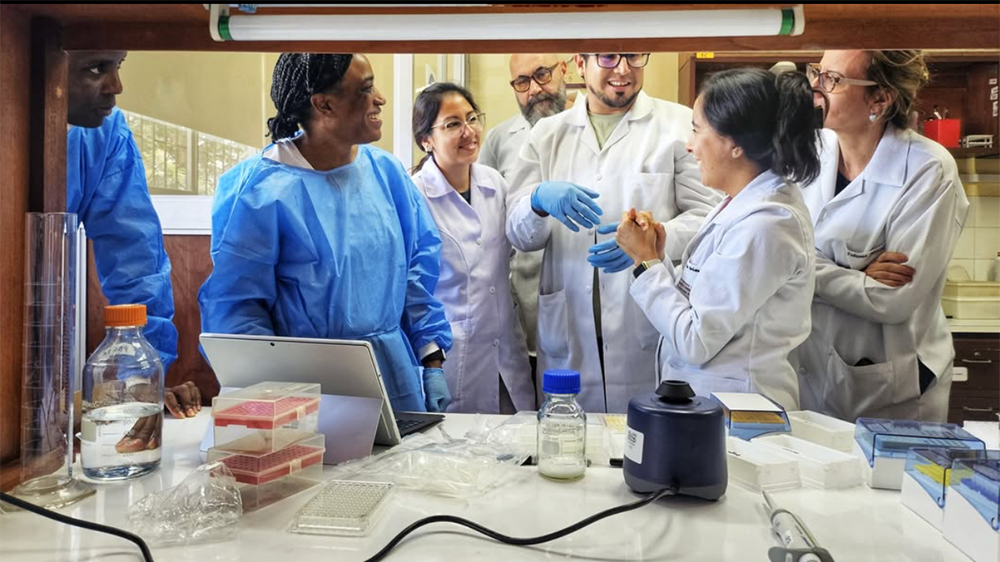
IVI is a non-profit organization with a mission to ensure that life-saving vaccines reach low- and middle-income countries. For two decades, this work has been led from South Korea. Establishing in Stockholm reflected the need for more distributed global leadership and for strong public–private partnerships capable of translating research into tangible societal benefit.
Sweden does more than host IVI. Through long-term support via Sida and targeted investments in the European office, Sweden is helping to build a multidisciplinary team in one of Europe’s strongest life science clusters, at Karolinska Institutet Science Park in Solna. The results are measurable.
Since 2022, Sweden’s support has catalyzed more than 40 vaccine projects involving over 60 academic, public, and industrial partners in more than 25 countries. Every Swedish krona invested has, on average, mobilized an additional 5.3 kronor—and up to 14.2 kronor through co-financing—demonstrating how strategic investments can generate global leverage.
With a Nordic scientific foundation and Swedish support, IVI has advanced a new oral cholera vaccine originally developed at the University of Gothenburg. IVI has produced an improved vaccine, DuoChol, delivered as a swallowable capsule. The capsule offers improved stability and reduced temperature sensitivity and is designed for rapid deployment during deadly outbreaks. This comes amid an acute global shortage: cholera outbreaks rose sharply in 2024, with more than 60 countries—primarily in Africa and Asia—reporting cases. The vaccine will be clinically evaluated in a Phase 1 study in Stockholm, using trial material produced by a Swedish biotechnology company. Here, science, industry, and societal responsibility converge in practice.
IVI develops and improves vaccines against typhoid fever, rheumatic heart disease, measles, hepatitis E, shigella, HPV, cholera, chikungunya, MERS, and COVID-19, among others. Its work has also enhanced vaccine safety, trained hundreds of professionals in pharmaceutical manufacturing, and strengthened the capacity of low- and middle-income countries to lead their own research and production of essential vaccines.
This is the kind of capacity building the Nordic countries have long championed: empowerment over dependence, partnership over charity.
But leadership today requires more than good examples. It requires scale and speed.
To illustrate this, IVI—together with the Coalition for Epidemic Preparedness Innovations (CEPI)—recently conducted a groundbreaking “100 Days Mission” tabletop exercise in South Korea, simulating the rapid development and testing of vaccines in a future pandemic. Authorities, regulators, industry, and decision-makers tested their preparedness under realistic conditions.
This should be the next step for the Nordic region as well.
Following a recent mapping of Nordic capacities and a regional conference on vaccine research, development, and manufacturing in Stockholm, the conclusion was clear: individually, the Nordic countries are small. Together, they form one of the world’s most innovative regions. A joint Nordic 100 Days Mission exercise would transform cooperation from aspiration into real preparedness.
Mark Carney’s warning applies here as well. In health, as in geopolitics, middle powers that fail to coordinate risk having decisions made over their heads—about access, supply, and security. Those who act together, by contrast, can shape the rules of the game.
Sweden has shown what is possible. The next step is Nordic.
Middle powers must act together. In global health, the cost of failing to do so is measured in human lives.
Dr. Jerome Kim
Director General of the International Vaccine Institute.
Dr. Anders Nordström
Flobal health policy expert and former Swedish Ambassador for Global Health.
A swedish version of this article was previously published here.
Read also
|
Uppläsning av artikel
|

