

African intellectuals are not a uniform group. They operate across disciplines such as philosophy, history, economics, sociology and literature, and across spaces around the world. What unites them is a shared engagement with a central question. How can Africa be thought critically in a world still marked by unequal power relations?
Who counts as an intellectual? In many traditions, the figure of the intellectual is tied to the search for truth, social critique and public engagement. From the Dreyfus Affair (a political scandal in 1894 in France that mobilised writers and thinkers to defend justice) to postcolonial debates, intellectuals are those who intervene in society, not just to interpret the world, but to challenge it.
In the African context, this role takes on particular urgency. Intellectuals on the continent and in the diaspora have long navigated a complex terrain shaped by colonial legacies, political constraints and global inequalities. They are not simply producers of knowledge. They are mediators between worlds, engaged in a struggle over meaning, identity and historical narrative.
As a scholar of cultural studies and postcolonial thought, I’ve sought, in a new French book, to analyse their paths not as isolated figures, but as part of a broader constellation of what we’ve called “African intellectual sensibilities”.
These are ways of thinking that are at once critical, situated and globally engaged. This approach highlights how African thinkers contribute not only to debates about Africa, but also to the redefinition of knowledge production itself.
So, identifying African thinkers is not just an exercise in recognition. It’s part of a broader effort to rebalance an intellectual history that has too often marginalised or misrepresented African contributions. As Congolese philosopher Valentin-Yves Mudimbe famously argued, Africa has often been constructed as an object of knowledge rather than a subject producing it.
From this perspective, here are six intellectuals whose work helps us rethink Africa and the world.
The famous
1. Valentin-Yves Mudimbe (1941-2025)
Mudimbe is one of the most influential African philosophers of the late 20th century. His seminal work The Invention of Africa dismantles what he calls the “colonial library”, the body of western knowledge that has historically defined Africa from the outside.
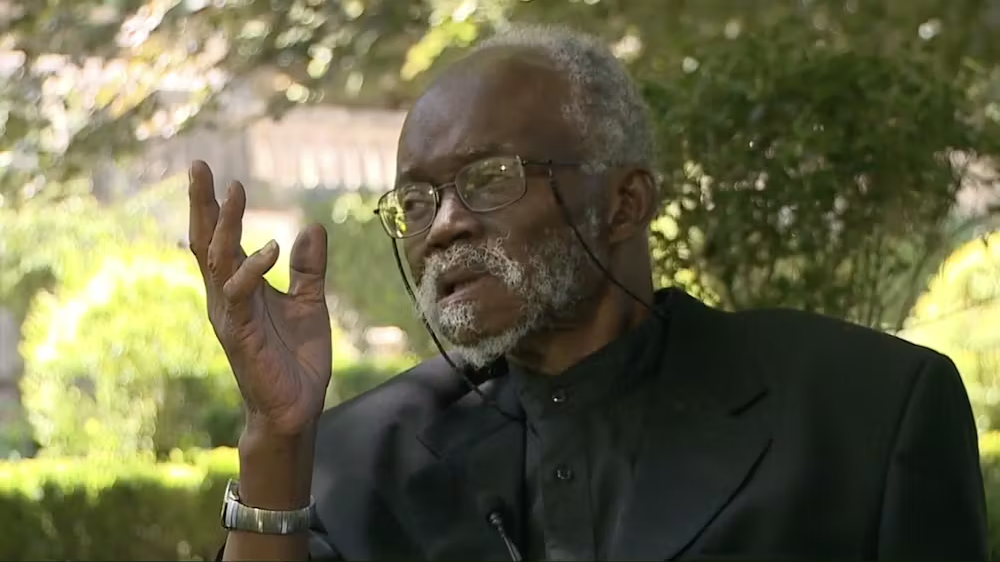
Rather than simply rejecting western thought, Mudimbe proposes a critical archaeology of knowledge. His work invites us to rethink how Africa can be known and, crucially, how it can speak for itself. He shifts the question from what Africa is to who has the power to define it.
His contribution goes further. By drawing on thinkers like Michel Foucault from France, he shows that knowledge is never neutral. It’s embedded in structures of power. This allows Mudimbe to expose how academic disciplines, from anthropology to history, have participated in constructing a distorted image of Africa.
His work opened the way for a generation of scholars who now seek to produce knowledge from within African perspectives rather than about Africa as an external object.
2. Achille Mbembe (born 1957)
A major voice in contemporary global theory, Cameroonian historian Mbembe explores how power operates in postcolonial societies. In works such as On the Postcolony and Critique of Black Reason, he analyses the afterlives of colonial violence and their impact on subjectivity.

Mbembe also emphasises the need for Africa to produce its own narratives. For him, intellectual work is inseparable from historical trauma, but also from the possibility of reinvention.
One of his key contributions is the concept of “necropolitics”, which examines how modern forms of power determine who may live and who must die. This framework has been widely used to analyse conflicts, borders and inequalities far beyond the continent.
At the same time, Mbembe insists on moving beyond victimhood. His work points toward what he sees as an emerging African future, shaped by mobility, creativity and new forms of belonging in a globalised world.
The fascinating
3. George Ayittey (1945–2022)
Ghanaian economist and thinker Ayittey stands out for his uncompromising critique of postcolonial African elites. While acknowledging the impact of colonialism, he argues that many of Africa’s problems today stem from internal governance failures such as corruption, authoritarianism and institutional decay.

One of his most influential ideas is the distinction between “cheetahs” and “hippos”. Cheetahs are a new generation of reform minded Africans, hippos are entrenched elites resistant to change. This captures a broader critique of political stagnation and elite capture.
Ayittey also insists on the importance of indigenous African institutions as resources for political renewal. His work is therefore not only critical, it is also programmatic, calling for a reconstruction of governance.
4. Kwasi Wiredu (1931-2022)
Ghanaian philosopher Wiredu is one of the most important figures in African philosophy. His central project, conceptual decolonisation, aims to free African thought from uncritically adopting western philosophical categories.
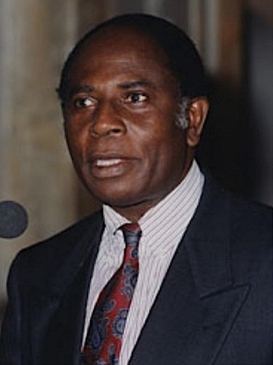
For Wiredu, language plays a crucial role. Philosophical problems are often shaped by the language they’re formulated in. By returning to African languages, he shows that debates about truth, personhood or political organisation can be reframed in very different ways.
His work on consensus-based political systems, inspired by Akan traditions, is particularly influential. Rather than relying on majoritarian democracy, Wiredu explores forms of deliberation that include agreement and social cohesion. In the process, he does not reject universality. He redefines it from within African intellectual traditions.
5. Oyèrónkẹ́ Oyěwùmí (born 1957)
Nigerian sociologist and gender scholar Oyěwùmí’s work offers a powerful critique of western ideas being applied to the rest of the world. In The Invention of Women, she argues that gender, as understood in western societies, was imposed on Yoruba social structures through colonialism.

Her research demonstrates that social organisation in Yoruba society was not originally structured around gender in the same way.
Rather than gender serving as the main axis of social difference, other markers such as age and status played a more central role. This challenges the assumption that categories such as man and woman are universally foundational.
More broadly, her work invites us to question how knowledge travels and how it can distort the realities it claims to describe.
The rising
6. Sabelo Ndlovu-Gatsheni (born 1967)
Zimbabwean historian Ndlovu-Gatsheni is a leading voice in decolonial theory. His work focuses on coloniality, understood as the persistence of colonial patterns of power long after formal independence.
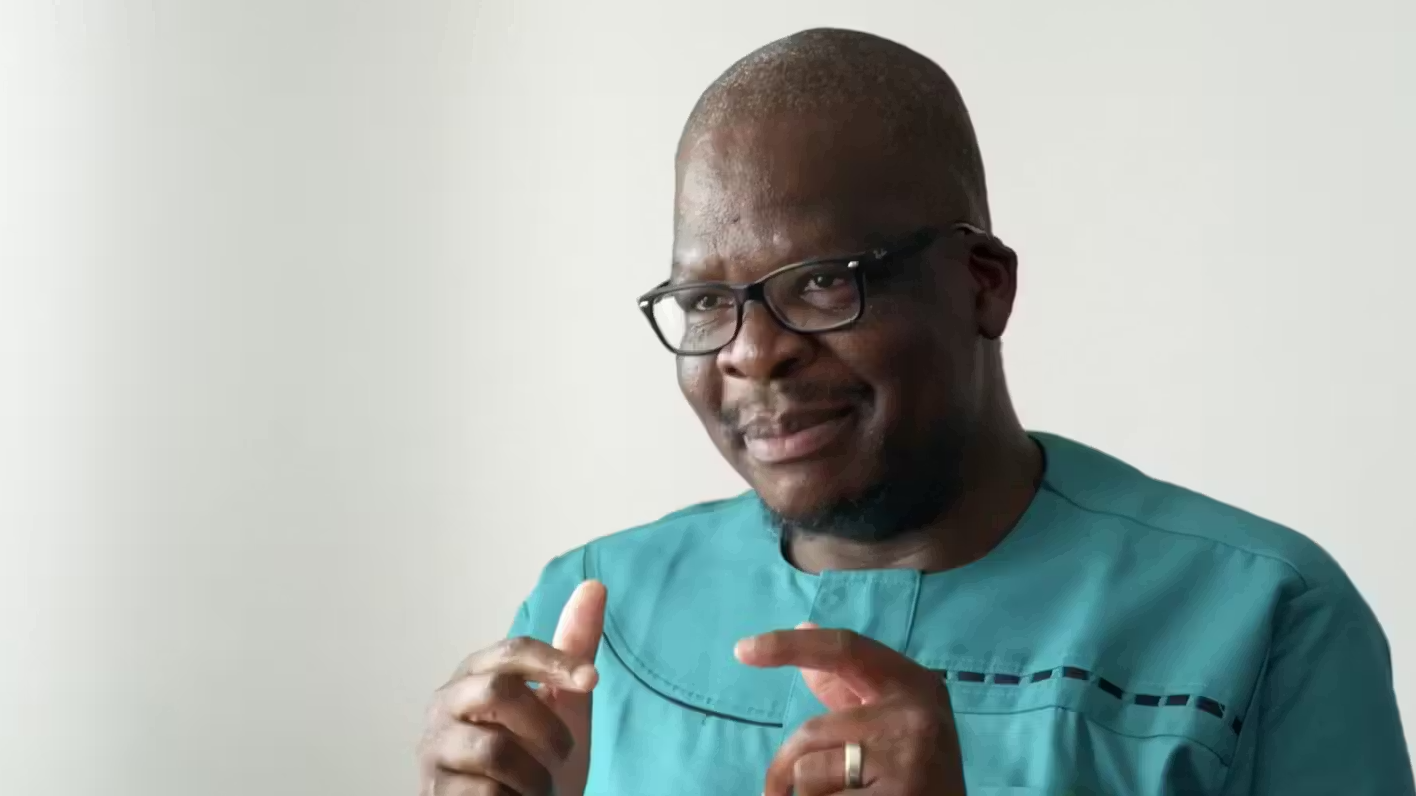
He criticises the global division of intellectual labour, where African scholars are often confined to producing data while the theory is developed elsewhere. For him, the issue is about who has the authority to produce knowledge.
His work calls for African perspectives to be put in the centre of global debates and for a transformation of the structures that continue to marginalise them.
Beyond a list
African intellectuals are not a uniform group. They operate across disciplines such as philosophy, history, economics, sociology and literature, and across spaces around the world.
What unites them is a shared engagement with a central question. How can Africa be thought critically in a world still marked by unequal power relations?
There are, of course, many other prominent African thinkers whose work deserves attention. The figures here have been chosen because they are particularly representative of different ways of thinking from and about Africa.
Each of them opens a distinct intellectual pathway, whether through the critique of knowledge, the analysis of power, the rethinking of social categories or the transformation of political and philosophical frameworks.
Christophe Premat
Professor, Canadian and Cultural Studies, Stockholm University
This article is republished from The Conversation under a Creative Commons license. Read the original article.
Read also
|
Uppläsning av artikel
|