
OPINION. The Swedish government’s new pragmatic approach towards Eritrea has failed to secure any clear concessions from one of the world’s most repressive regime. Now the government must act decisively, writes Susanne Berger and Caroline Edelstam.
The opinions expressed in this article are those by the authors.
Just before Christmas, news broke of a surprising two-day visit to Eritrea by Sweden’s Foreign Minister Maria Malmer Stenergard, the first by a Swedish top diplomat in 32 years.
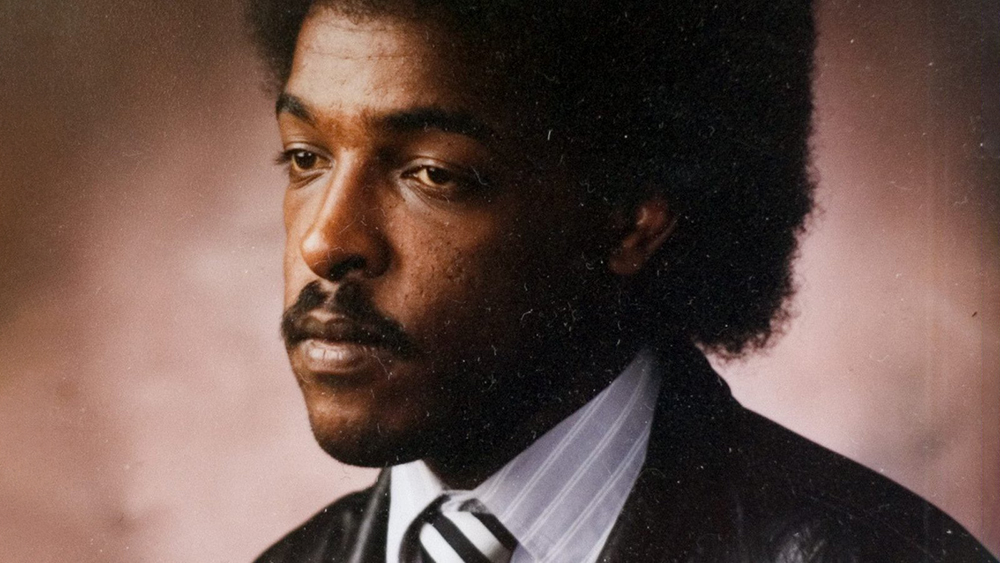
At home in Sweden, expectations mainly revolved around the Swedish Eritrean journalist Dawit Isaak, who has been unlawfully detained in Eritrea for 24 years. However, hopes for his immediate release were quickly dashed. Nevertheless, in her press conference after her return, Malmer Stenergard declared herself satisfied with her visit and what she said was the start of a “new approach”, one that would allow for ”better conditions” on a range of issue. The Foreign Minister also publicly confirmed that she believes Dawit Isaak to be alive.
It remains unclear whether Sweden received any prior guarantees about Mr. Isaak’s possible release in the near future. Maria Malmer Stenergard has scheduled a meeting with Dawit Isaak’s relatives on January 14 – the Orthodox Christian New Year’s Day, a date that is traditionally associated with pardons of political prisoners. Rumours of the imminent release of a large number of political prisoners have been circulating in Asmara for weeks. If this is the case, hopefully Dawit Isaak’s ordeal, as well as that of his family’s, can finally come to an end.
The New Era of Swedish Political Realism
The most significant thing about the trip, however, went almost unnoticed. Just like Malmer Stenergard’s previous visit to China in October 2025, her decision to go to Eritrea marked the beginning of a new era in Swedish foreign policy.
Maria Malmer Stenergard’s meetings seem to have focused primarily on strengthening Sweden’s and the EU’s strategic interests in the Horn of Africa, with an emphasis on economic and political relations – a new trend often referred to as geoeconomics. In this approach, value-based decision-making, including adovcacy of human rights, is noticeably toned down.
This is also underlined by the fact that Italian and Eritrean officials already in July 2025 signed a broad cooperation agreement in Asmara. According to press reports, the two countries held discussions aimed at ”promoting regional peace, security and stability” – almost verbatim the same agenda that Maria Malmer Stenergard is now highlighting.
Interestingly, Sweden has not entered into any formal agreements with Eritrea. That would probably have been a step too far, given that the Foreign Minister – despite the positive public spin around the visit – returned home bascially empty-handed.
According to Malmer Stenergard’s own account, she received no clear sign of life from Dawit Isaak, nor any contact with him. (It cannot be ruled out that she received more direct information that is too sensitive to make public.)
This was in many ways reminiscent of Minister Stenergard’s previous visit to China in the autumn. During her press conference on December 19, she stressed the symbolic significance of her trip to Beijing on October 17, the tenth anniversary of the transnational kidnapping and detention of Swedish publisher Gui Minhai. His family has not received any sign of life from him since 2018. So far, even a €2 billion investment from Swedish truck manufacturer Scania has not been able to secure this most basic humanitarian gesture from the Chinese government.
During and after the Foreign Minister’s visit to Asmara, Malmer Stenergard made no reference to Eritrea’s terrible human rights situation. When asked if she worried that her high-profile meetings with top Eritrean politicians would somehow legitimize one of the world’s most repressive dictatorships, Malmer Stenergard pointed to the recent releases of more than a hundred long-term political prisoners. When pressed further, she added that she had not discussed the issue with the Eritrean officials, because ”they don’t like to talk about these releases.” Her15-photo Instagram post after returning home emphasized only the positive aspects of her trip.
Malmer Stenergard repeatedly stressed that she emphasized to the Eritrean side the importance of Dawit Isaak’s release. However, her statement avoided any direct criticism of Eritrea’s brutal treatment of a fellow Swedish and EU citizen. Nor did she mention that Eritrea has so far not complied with her now almost four months old demand from September 2025 to grant Dawit Isaak’s immediate release on humanitarian grounds.
Dawit Isaak’s daughters worry that the Foreign Minister’s new approach will take time to produce result – precisely what their father does not have, after spending a quarter century in the regime’s notoriously cruel prison system.
The aging leadership in Asmara is under enormous pressure. Simply ”waiting out” the faltering Eritrean regime is not a viable strategy. Maria Malmer Stenergard must act decisively and show that she has a clear plan to bring Dawit Isaak home to put an end to his terrible suffering as quickly as possible – and that Sweden will accept nothing less.
Susanne Berger
Senior Fellow, the Raoul Wallenberg Centre for Human Rights
Caroline Edelstam
Co-Founder and President of the Edelstam Foundation
Read also
|
Uppläsning av artikel
|