
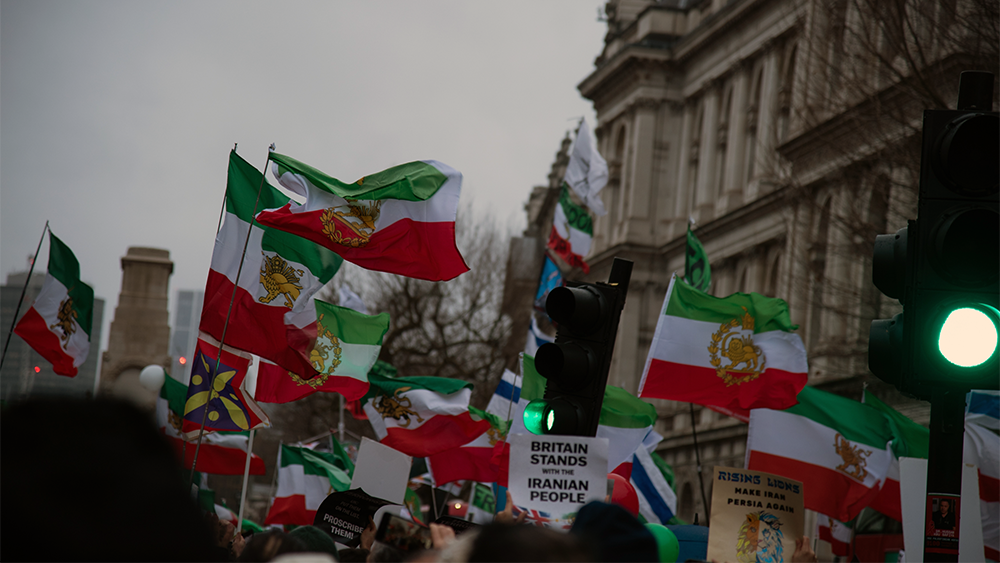
The future of Iran must be decided by its own people. European governments should neither impose political outcomes nor remain indifferent when millions demand basic freedoms, writes the Swedish-Iranian human rights advocate Abdolnaser Sadidi.
The opinions expressed in this article are those by the author.
For decades, Sweden has enjoyed an international reputation as a principled advocate of human rights, democracy, and international law. Whether supporting victims of conflict, promoting gender equality, or defending civil society, Swedish diplomacy has sought to place universal values at the centre of foreign policy. Yet one important question deserves renewed attention: how should Sweden respond to Iran at a time when the country is experiencing one of the deepest political and social crises in its modern history?
This question is no longer merely theoretical. Iran is undergoing profound change. Years of economic decline, systemic corruption, widespread social discontent, and political repression have eroded public confidence in the ruling establishment. Successive nationwide protests have demonstrated that millions of Iranians are demanding more than incremental reform. They seek accountable government, political freedom, and respect for fundamental rights.
For many years, European policy toward Iran has been dominated by concerns over nuclear negotiations, regional security, and diplomatic engagement. These issues remain important, but they should no longer define Europe’s entire approach. An Iran policy that overlooks the aspirations of the Iranian people is unlikely to contribute either to lasting regional stability or to the promotion of democratic values.
Recent political discussions in several European countries illustrate that this debate is evolving. Parliamentary initiatives and public forums—including recent meetings in Italy—have begun to address not only how Europe should respond to the current Iranian authorities but also how it should engage with democratic alternatives and civil society. This broader conversation deserves attention across Europe, including in Sweden.
At the centre of this discussion is a simple but importaxlnt principle: the future of Iran must be decided by its own people. European governments should neither impose political outcomes nor remain indifferent when millions demand basic freedoms. Supporting universal human rights and the right of people to determine their own future is fully consistent with the democratic values that Sweden has long championed.
One of the democratic visions that has attracted increasing international attention is the Ten-Point Plan proposed by Maryam Rajavi, President-elect of the National Council of Resistance of Iran (NCRI). The plan calls among other things for free and competitive elections, political pluralism, freedom of expression and association.
Whether one supports the NCRI politically is ultimately a matter for governments and citizens to judge. What deserves recognition, however, is that democratic transitions require more than opposition to authoritarian rule. They also require credible constitutional ideas, a commitment to democratic norms, and a vision for peaceful governance after political change. These are questions that should be examined openly rather than dismissed without debate.
Sweden has a long tradition of engaging with defenders of democracy and human rights around the world. It has welcomed exiled journalists, supported international accountability mechanisms, and spoken out against serious human rights abuses. Applying those same principles consistently to Iran means paying closer attention to the voices of Iranian civil society.
The courage shown by ordinary Iranians over recent years has been remarkable. Women have challenged compulsory restrictions despite enormous personal risks. Young people have continued to demand freedom despite repeated crackdowns. Workers, teachers, pensioners, and professionals have organised peaceful demonstrations calling for dignity, justice, and accountable government. These developments demonstrate that the demand for democracy is deeply rooted within Iranian society itself.
Europe therefore faces a broader strategic choice. It can continue viewing Iran primarily through the narrow lens of diplomatic crisis management, or it can adopt a more comprehensive policy that gives equal weight to human rights, democratic aspirations, and long-term stability. The latter approach does not require abandoning diplomacy. It requires recognising that sustainable stability cannot be achieved by overlooking the political aspirations of a nation’s citizens.
For Sweden, this is also a question of credibility. A foreign policy built upon democracy and human rights should naturally seek dialogue with those who advocate those same principles inside and outside Iran. Such engagement does not mean endorsing every political actor. Rather, it reflects a willingness to listen, to encourage democratic debate, and to support universal rights without double standards.
The decisions taken in European capitals—including Stockholm—will not determine Iran’s future. That future belongs to the Iranian people alone. But Europe can choose whether its policies reflect the values it so often proclaims.
History often presents moments when democratic societies must decide whether to remain observers or become principled supporters of peaceful change. Iran may now be approaching such a moment. The decisions taken in European capitals—including Stockholm—will not determine Iran’s future. That future belongs to the Iranian people alone. But Europe can choose whether its policies reflect the values it so often proclaims.
For Sweden, listening to the voices of democratic Iran is not simply an act of solidarity. It is an affirmation that human rights, democracy, and the rule of law remain the foundation of responsible international engagement. At a time when millions of Iranians continue to seek those very principles, Europe—and Sweden in particular—should ensure that their voices are heard.
Abdolnaser Sadidi
Swedish-Iranian human rights advocate and the head of the Association of Families of the 1988 Massacre Victims.
Read also
|
Uppläsning av artikel
|