
Three decades of geospatial research reveal how settlement expansion, land confiscation and administrative restructuring are transforming the occupied Palestinian territory faster than diplomacy can respond, writes Jad Isaac, Director General Applied Research Institute – Jerusalem (ARIJ).
The opinions expressed in the article are those by the author.
For more than three decades, the international community has repeated the same political slogan: the two-state solution remains the only viable path to peace.
Yet while diplomats have continued to issue statements and reaffirm commitments, the geography on the ground has changed far more rapidly than the diplomacy meant to protect it.
This is not simply another cycle of conflict. It is the systematic transformation of an occupied territory into a different political reality.

At the Applied Research Institute Jerusalem (ARIJ), we have spent decades documenting changes on the ground through aerial photos, satellite imagery, field research, geographic information systems, legal analysis, and historical records. Our latest assessment is not an opinion piece disguised as research. It is the result of more than thirty years of systematic evidence gathering, and it raises an uncomfortable question:
At what point does the international community acknowledge that the reality it has accepted no longer resembles the peace process it continues to defend?
The numbers tell a story that diplomacy often fails to capture.
Since 1992, the number of Israeli settlers in the occupied West Bank has grown from approximately 248,000 to nearly 954,000. Settlement areas have expanded from 77 square kilometres to 238 square kilometres. Today, approximately 470 settlement locations, including around 300 outposts, stretch across the occupied West Bank.
Meanwhile, 58.6 percent of the West Bank has been placed under Israeli control through military orders, state land declarations, nature reserves and other legal mechanisms. Palestinians, who make up the overwhelming majority of the population, are effectively confined to Areas A and B, which together constitute only 36 percent of the West Bank, despite the territorial arrangements envisioned under the Oslo Accords.
These are not isolated statistics.
Together, they describe the gradual replacement of one territorial reality with another.
The language surrounding Palestine often focuses on diplomacy, negotiations, and security. Yet maps reveal something different. Roads, military zones, settlement blocs, land registration procedures and administrative restructuring are redrawing the landscape faster than negotiations can respond.
History teaches us that colonization rarely announces itself through a single defining moment. More often, it advances incrementally through legislation, planning decisions, infrastructure, administrative measures, and facts established on the ground before the world has time to react.
That is precisely why evidence matters.
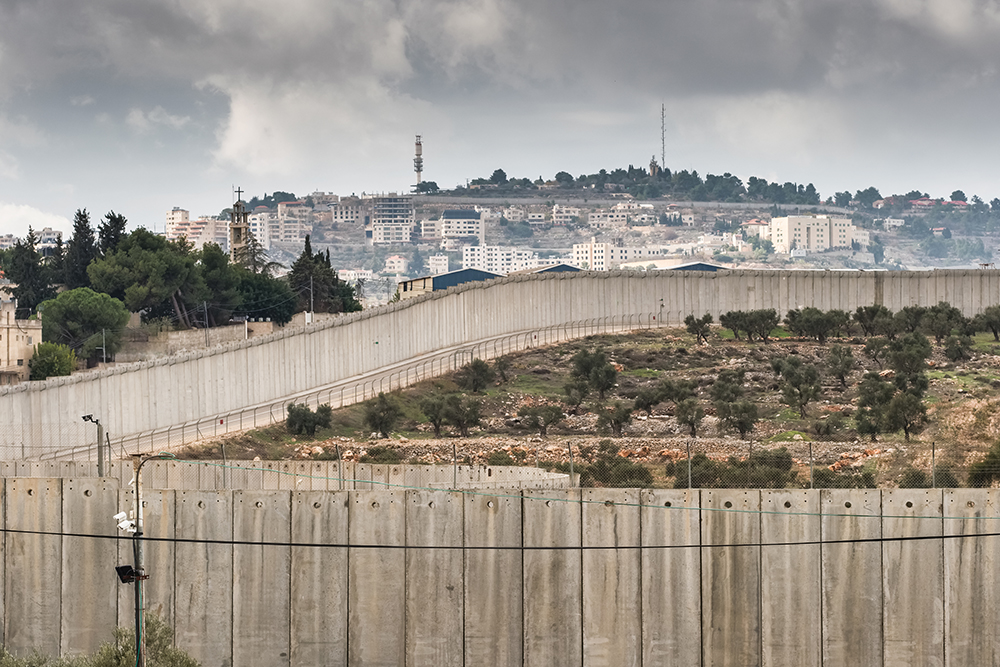
When movement restrictions increase from 567 to 910 checkpoints, gates and physical barriers, mobility becomes a political instrument. When more than 32,000 olive and fruit trees are uprooted in a single year, environmental destruction also becomes cultural erasure. When more than 1,500 Palestinian homes and structures are demolished within a year, displacement is no longer incidental. It becomes systemic.
The war in Gaza has understandably dominated international attention, and its humanitarian consequences are catastrophic. Yet while the world’s cameras remain focused on Gaza, another transformation continues across the West Bank, one that receives only intermittent attention despite carrying profound implications for any future political settlement.
If territorial fragmentation continues at its current pace, what exactly will remain to negotiate?
This is no longer simply a Palestinian question. It is a question about whether international law still functions when confronted by prolonged occupation.
The international legal framework is remarkably clear. The prohibition on acquiring territory by force, the protection of occupied populations and the right of peoples to self-determination are not political preferences. They are foundational principles of the post 1945 international order. If those principles become negotiable in one place, they become weaker everywhere. The consequences extend well beyond Palestine. They reach every conflict where power seeks legitimacy through permanence.
This is why documenting reality is not an academic exercise. Evidence creates accountability. Maps become witnesses. Statistics become part of the historical record. Without rigorous documentation, today’s incremental changes become tomorrow’s accepted status quo.

The debate should therefore move beyond whether peace is desirable. Virtually everyone agrees that it is. The real question is whether peace remains physically possible if the territorial basis upon which it depends continues disappearing year after year.
Researchers cannot negotiate peace, nor can they determine political outcomes. Our responsibility is different. It is to ensure that decision makers, journalists and citizens cannot later claim they did not know what was happening while it was happening.
History will judge many aspects of this period. One of them will be whether the international community recognized reality while there was still time to influence events, or whether it continued speaking about peace long after the geography required for peace had disappeared.
Jad Isaac
Director General Applied Research Institute – Jerusalem (ARIJ)
Read also
|
Uppläsning av artikel
|