
OPINION. The Iranian people have paid a tremendous price for freedom. On June 20 thousands of Iranians will travel France for a rally to promote regime change in our homeland. The least the democratic world can do is listen to their voice, writes the Swedish-Iranian human rights advocate Abdolnaser Sadidi.
The opinions expressed in this article are those by the author.
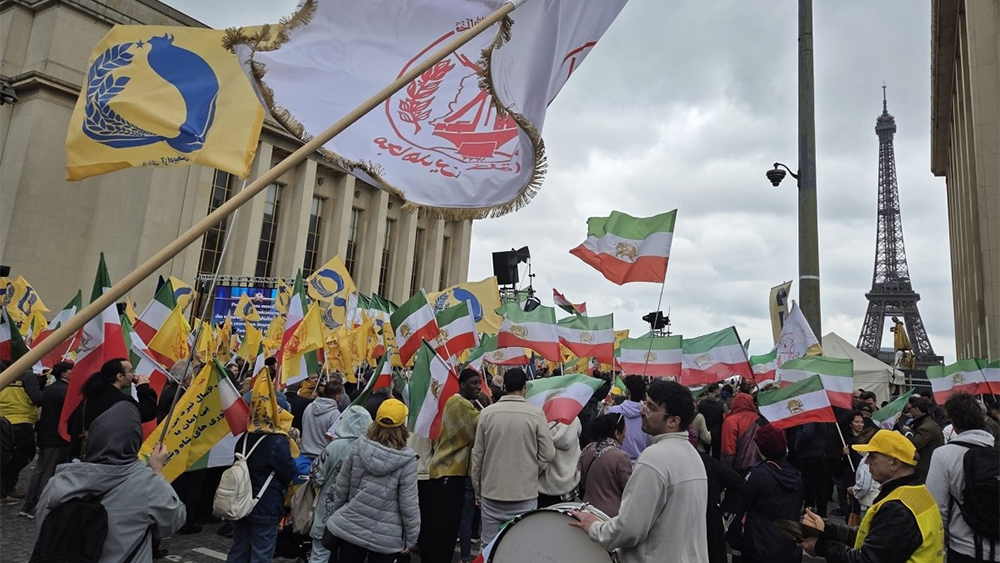
On June 20, many other members of Sweden’s Iranian community and I will be traveling to France for a rally to promote regime change in our homeland. It is expected that upwards of 100,000 people will make similar journeys from all around the world to attend the event organized annually by the largest opposition coalition, the National Council of Resistance of Iran (NCRI).
The NCRI’s principal constituent organization, the People’s Mojahedin Organization of Iran (PMOI/MEK), is on the front lines of the struggle for a democratic alternative to Iran’s current theocratic dictatorship. Since the nationwide uprising that brought the regime to the brink of overthrow in January, the PMOI’s Resistance Units have carried out more than 600 operations inside Iran, mostly targeting repressive institutions such as the Islamic Revolutionary Guard Corps (IRGC) and the Ministry of Intelligence and Security.
In February, roughly a week before the start of the joint U.S.-Israeli bombardment of the regime, approximately 250 PMOI operatives reportedly stormed Tehran’s Motahari Complex, the offices of former Supreme Leader Ali Khamenei. The rebels succeeded in breaching the outer security perimeter and engaging in a lengthy battle, with significant casualties on both sides, before withdrawing to their bases of operations.
That incident, perhaps more than any other in recent years, demonstrated that the Iranian people and their organized resistance movement are prepared and capable of directly confronting the ruling system. The gathering in Paris later this month will underscore that reality. Its message to European leaders, Washington, and the broader international community will be clear: the objective should not be to walk away after recent military actions, but to shift the burden of change to the Iranian people and the organized democratic resistance that stands ready to break the mullahs’ grip on power and establish a free and representative republic.
The framework for that future system was articulated years ago in the Ten-Point Plan proposed by NCRI President-elect Maryam Rajavi. It has since been endorsed by hundreds of Western policymakers, many of whom are expected to attend the June 20 rally. The plan calls for free and fair elections within six months of the regime’s ouster and for a new constitution that guarantees the separation of religion and state, gender equality, and equal rights for all Iranians.
The promise of that democratic alternative became even more tangible on February 28, when it was confirmed that Khamenei had been killed in the first round of American strikes and the NCRI declared it “the death of religious tyranny and the end of the regime.” The coalition also announced the formation of a provisional government, which now stands ready to administer the country’s affairs while awaiting elections for a Constituent Assembly.

The international community has the power to mitigate further bloodshed and given the scale of the killing carried out by Tehran since the latest uprising, this should be a priority regardless of ongoing efforts to end the U.S.-Iran war.
In just a matter of days, at the height of the January uprising, Iranian authorities opened fire on crowds of protesters across the country, killing an estimated 30,000 people. Since then, Iran’s already alarming rate of executions—one of the highest in the world—has continued to rise dramatically.
At least nine members of the PMOI were executed in April and May alone, along with four members of other opposition groups and several individuals sentenced to death solely for participating in protests. There is growing concern that current trends point toward only one of two outcomes: regime change or another massacre of Iran’s freedom fighters.
The international community can help by increasing the regime’s isolation and by holding its institutions and officials accountable. Such support need not involve direct intervention. Mrs. Rajavi has consistently emphasized that Iran’s future must ultimately be determined by the Iranian people themselves.
The June 20 event will provide detailed accounts of the progress made by the Resistance Units and the emerging National Liberation Army. It will also offer further insight into how the provisional government intends to build on that progress and cooperate with democratic nations once the mullahs’ regime has fallen.
As members of Sweden’s Iranian community, one of the largest Iranian diaspora communities in Europe, we ask policymakers, journalists, and opinion leaders to give this event the attention it deserves and to seriously consider the role that democratic Iranian opposition forces can play in shaping a peaceful future for Iran.
The Iranian people have paid a tremendous price for freedom. The least the democratic world can do is listen to their voice.
Abdolnaser Sadidi
Swedish-Iranian human rights advocate and the head of the Association of Families of the 1988 Massacre Victims.
Read also
|
Uppläsning av artikel
|