
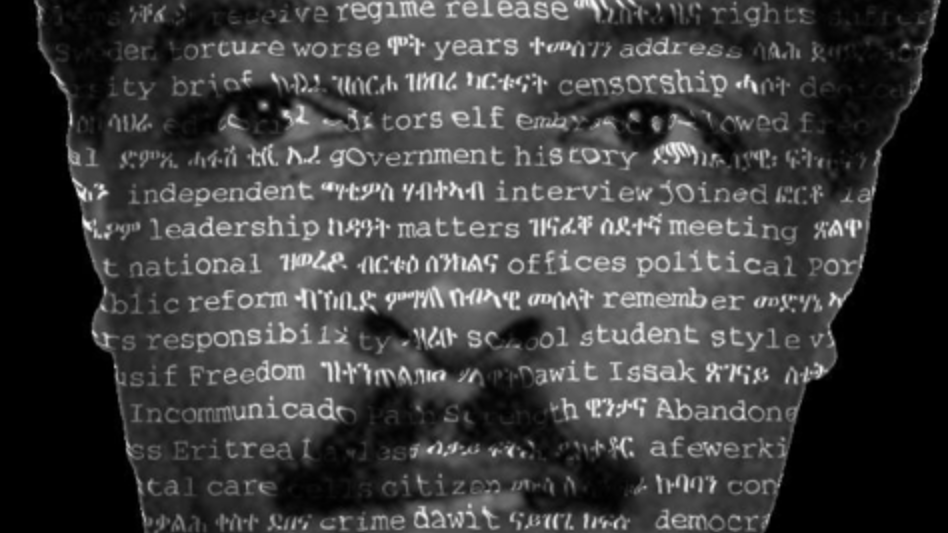
OPINION. On 15 May, Dawit Isaak will have been imprisoned for 9,000 days. The Swedish government must now account for its actions, write Susanne Berger and Caroline Edelstam.
The opinions expressed in this article are those by the authors.
Swedish journalist Dawit Isaak has been imprisoned in Eritrea for almost 25 years, without charge or trial. The last confirmed contact with him dates back to 2005. Eight months ago, on September 25, 2025, the Swedish Minister for Foreign Affairs, Maria Malmer Stenergard met with Eritrea’s Minister for Foreign Affairs, Osman Saleh, to demand his immediate release on humanitarian grounds.
So far, and not surprisingly, Eritrea has refused to honor Sweden’s request. It is not known if President Isaias Afwerki has ordered the implementation of any intermediate steps, as would be the case if a release were in fact imminent. Such measures would include presenting a clear proof of life; facilitating direct contact with Dawit Isaak; arranging for an independent medical examination; and preparing for his timely repatriation to Sweden.
The US government could play an important role
Meanwhile, according to a recent report in the Wall Street Journal, the US government is considering the granting of sanctions relief to the Eritrean government, in an effort to normalize relations, due to geostrategic considerations in the volatile Horn of Africa. If indeed so, the Swedish government has an important opportunity to press for Dawit Isaak’s release. As NATO partners, Sweden and the US have forged numerous high-level bilateral partnerships in recent years, especially in the areas of space technology and AI development. This affords Swedish officials direct access to top US policy makers, including President Donald J. Trump.
Several US citizen are also currently missing and detained in Eritrea.The Swedish government is, therefore, in a unique position to impress on its American counterparts that the lifting of sanctions for one of the world’s most repressive regimes should be contingent on President Afwerki granting key concessions, including the release of Dawit Isaak and other long-term political prisoners.
Counsel requests update
After her visit to Eritrea last December, Foreign Minister Malmer Stenergard indicated that she firmly believes Dawit Isaak to be alive. Neither she nor the Eritrean government have commented in any detail on his case since then.
On the whole, one gets the impression that both sides are more interested in managing the problem rather than solving it.
Given Dawit Isaak’s advancing age (he will turn 62 in October) and the harsh conditions of his imprisonment, with no contact to the outside world, the Swedish government must urgently provide an update on his status. If the Eritrean authorities have not presented a direct proof of life for him and permitted consular access, it would be crucial to learn Eritrea’s official explanation for this failure.
To this end, Irwin Cotler, Dawit Isaak’s international legal counsel, last month submitted a formal letter of inquiry to the Swedish Ministry for Foreign Affairs. Cotler previously served as Canada’s Minister of Justice and Attorney General. He is also the founder and international chair of the Raoul Wallenberg Centre for Human Rights (RWCHR).
Dawit Isaak’s case is complicated by the fact that his arrest in 2001 was linked to a group of more than two-dozen other journalists and former government officials who criticized President Afwerki’s refusal to implement democratic reforms. Isaak’s release would undoubtedly focus attention on the fate of these other long-term detainees, something the Eritrean regime clearly wishes to avoid. Swedish officials have never clarified how they plan to solve this dilemma.
Questions about Dawit Isaak’s health
Similarly relevant is the question if Eritrean authorities have given clear indications that they intend to free Dawit Isaak; and, if so, what concrete timeline they have provided for his release. May 24 marks Eritrea’s Independence Day on which the government traditionally grants clemency to political prisoners. Hopes remain high that he could be among the individuals Eritrea plans to free on that day.
Dawit Isaak is known to suffer from several potentially serious health issues, including diabetes. It must be clarified if the Eritrean government’s failure to grant his immediate release is due to any acute health problems that require treatment and do not allow him to be moved.
The family’s right to the truth
It remains unclear what steps Swedish authorities are prepared to take if Eritrea continues to refuse Sweden’s request to free Dawit Isaak or to provide concrete information about his status. These steps could range from Sweden and the European Union (EU) imposing targeted sanctions, like travel and visa restrictions, and the freezing of assets, to leveling criminal charges against members of the Eritrean leadership.
Just a few days ago, the International Commission of Jurists (ICJ), along with dozens of other international NGOs, issued an urgent appeal to the UN Human Rights Council to seek enhanced accountability for Eritrea‘s serious human rights violations.
Dawit Isaak has now spent more than a third of his life in prison. His family has the right to the truth about his fate. The EU has for years abstained from directly challenging Eritrea on the issue of human rights, counting instead on continued engagement and an “enhanced interactive dialogue” with the regime. The lackluster results of this approach strongly suggest that if Dawit Isaak is to be saved, Sweden and its European partners need to dramatically change course and finally make the rescue of their own citizen a top priority.
Sweden and the EU are at a crossroad: Either they seek Dawit Isaak’s rescue with the determination and focus his situation demands; or they simply allow Eritrea to string them along, permitting both the uncertainty and the crimes committed against him to continue. After 9,000 days of painful waiting, Dawit Isaak and his family deserve to know which it will be.
Susanne Berger
Senior Fellow, the Raoul Wallenberg Centre for Human Rights
Caroline Edelstam
Co-Founder and President of the Edelstam Foundation
Read also
|
Uppläsning av artikel
|