
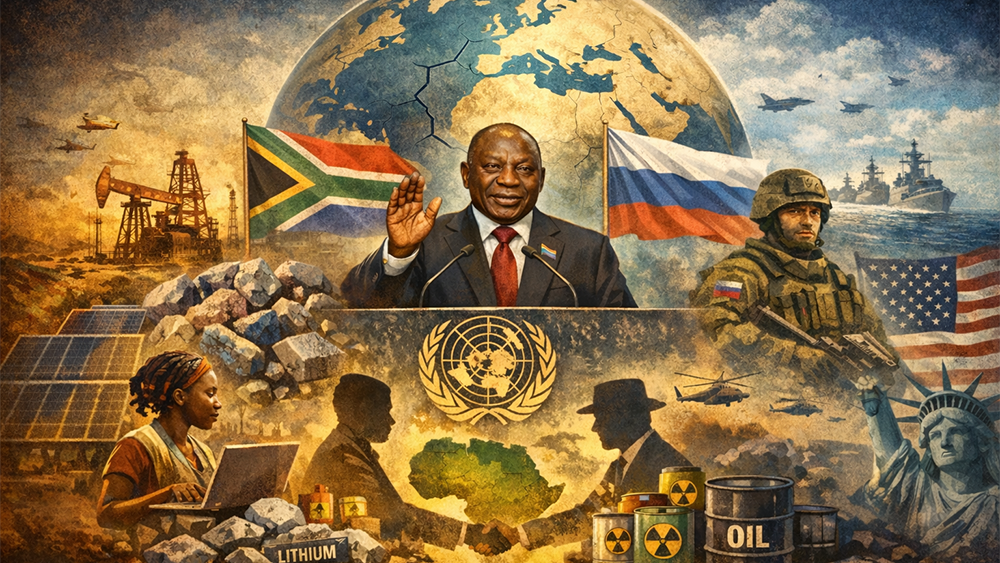
ANALYSIS, South Africa have turned into a visible advocate defending the United Nations and its Charter, proving that multilateralism is alive. The US should not take it for granted that access to and control over African resources remains at its discretion. Today, those territories insulted as “shitholes” has acquired a substantial bargaining power, writes Henning Melber, Professor at the University of Pretoria.
This is an analysis. The opinions expressed in the article are those by the author.
The world (dis-)order has always been based on hierarchies, double standards and asymmetric power relations. Injustices were an integral part of global governance. With multipolarity eroding multilateralism, international law has become more defunct. Universal normative frameworks are contested if not openly levered out. Transactional exchange relations replace negotiated deals. Efforts to face and curb effects of climate change, poverty and the decline of human wellbeing weaken. Softening measures and interventions, if only as a kind of humanitarian gesture within global hierarchies of inequality, are considerably scaled down if not entirely abandoned. On these shifting grounds, the decision how best to cope with the new divides is also on the people and states of the African continent. What is their positionality and how will they handle the new challenges?
Further marginalisation by de-coupling?
Africans can tell a story, when it comes to unequal exchange and double standards. The dependency on humanitarian support to compensate at least in a small part for the effects of unfair exchange relations became painfully obvious with the dismantling of USAID. This had lethal effects for programmes not least on gender-based violence, reproductive rights and HIV/Aids treatment. Other US American as well as European government agencies also stopped or considerably reduced funding with devastating results. One example of many is the downscaling of demining programmes in Zimbabwe.
A further retreat of the USA from global institutions increases the damage. In January, Washington withdrew from 31 UN entities and 35 other international bodies. Having abandoned the Paris Agreement on climate again, a renewed exit from the WHO followed. Isolationism took also other forms. By January 2026, citizens of 39 African countries were either banned or partially restricted from travelling to the USA.
Those eligible for visa applications must deposit refundable bonds of up to US$ 15,000. As Atunde Ahmed Olarewaju observed, “Cooperation is no longer negotiated – it is enforced through selective exclusion.”
Transactionalism versus resource power
In November 2025 the White House released the National Security Strategy (NSS). The 29-page document ends with just three paragraphs on Africa. It declares a “transition from an aid-focused relationship with Africa to a trade- and investment-focused relationship, favoring partnerships with capable, reliable states committed to opening their markets to U.S. goods and services.” Investment in Africa should concentrate on the energy sector and critical minerals: “Development of U.S.-backed nuclear energy, liquid petroleum gas, and liquified natural gas technologies can generate profits for U.S. businesses and help us in the competition for critical minerals and other resources.”
The re-orientation signals, in the words of the Financial Times “a new era of resource imperialism”. It pushes the African continent further into a peripheral status with a few pockets of interest for business and exploitation. This was diagnosed as “Africa Blind Spot” which is “constrained, selective, and dependent on what Africa can offer in an increasingly competitive world.” The continent’s wealth is relevant when it comes to “critical minerals supply chains, assertive approaches by middle powers and strategic competitors, and dynamic sociopolitical shifts.” The authors warn of a NSS misdiagnosis of Africa as a passive sphere of interest, overlooking the continent’s agency through governments, regional bodies and civil societies.
The transactional approach cultivates the misperception that only the MAGA obsession calls the shots and sets the tune. The US-American Ambassador to Namibia, John Giordano, was end of October the first appointment under the second Trump administration for an African country. As the embassy openly declared, his choice was motivated by a strategy “to position Namibia as a reliable strategic partner for the United States in securing uranium, energy resources, logistics infrastructure, and long-horizon industrial supply chains that reduce dependence on adversarial chokepoints”. In early February he explained to the BBC World’s Focus on Africa that Namibia is of special strategic importance because of resources such as offshore oil, uranium, lithium and tantalite.
Resource rich territories are anything but ‘terra incognita’ and an object of desire and engagement for several potent competitors.
But these ambitions need a reality check. The Namibian uranium production (ranking as the third highest in the world) is almost entirely under the control of Chinese companies. Namibia’s government has entered collaboration with Russia considering building a nuclear energy plant. As this shows, resource rich territories are anything but ‘terra incognita’ and an object of desire and engagement for several potent competitors.
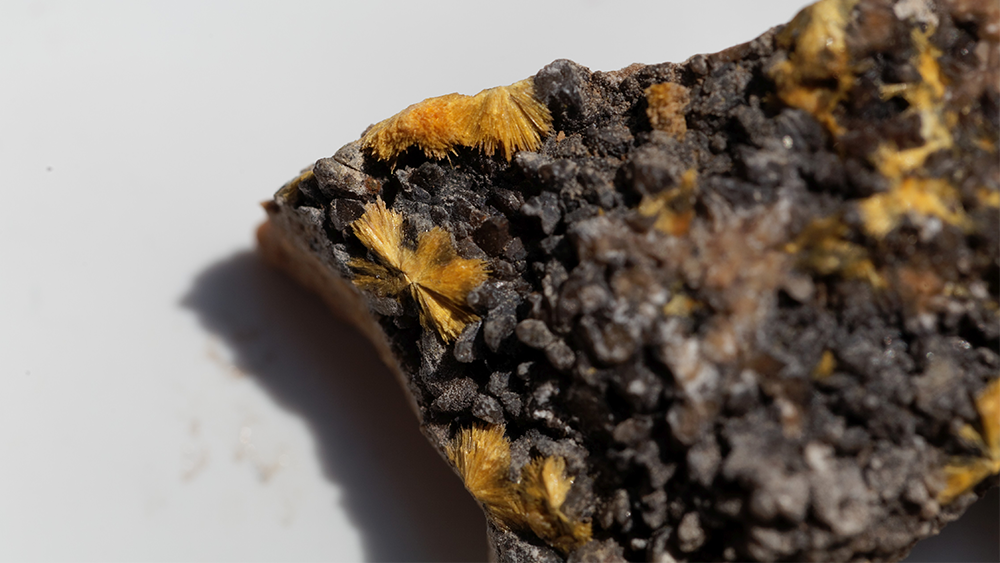
As an article in the Geopolitical Monitor pointed out, Africa has been elevated to an “essential centre of gravity in global geoeconomics” with substantial bargaining power. Rich deposits such as cobalt, bauxite, rare earths, graphite, lithium and manganese endowment, indicate the growing relevance of critical minerals supply chains. The reinvestment into the refurbishment of the Lobito corridor is a recent example. Uranium, oil and gas, as well as the suitable production sites for green hydrogen play crucial roles in global energy production and security. These natural assets, in combination with land suitable for agrobusiness, are attracting geopolitical hedging. To this adds the number of locations of significant geostrategic military relevance in a global security perspective. All of this provides leverage.
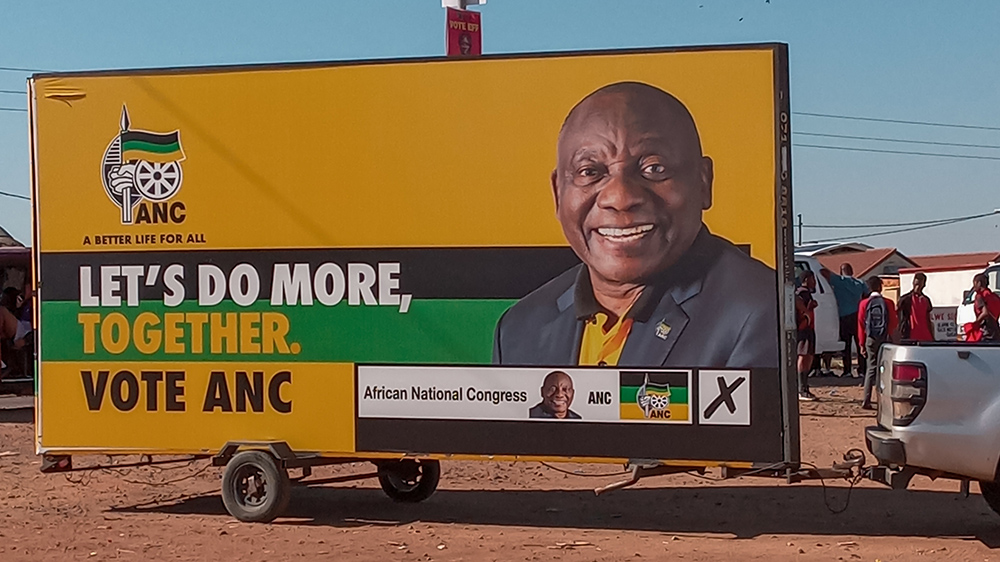
The competition, increased by the expansion of new middle powers also from the “global South”, plays out on the African continent. Washington should not take it for granted that access to and control over African resources remains at its discretion. The manoeuvring space of those territories insulted as “shitholes” has considerably increased. The changing landscape reflects new realities. Standard Bank as the largest lender by assets on the continent has as the first African bank in November 2025 integrated the Chinese Cross-border Interbank Payment System (CIPS). This adds the Renminbi to the financing modalities, reducing the dominance of the US-Dollar as another step in the trend towards de-dollarisation of the international financial system on the continent.
Test case South Africa
The NSS suggested to amend the African Growth and Opportunity Act (AGOA). Expired end of September 2025, it then offered 32 African countries duty-free access for many exports to the US market. President Trump extended retroactively the preferential trade pact in early February until the end of 2026, including reimbursement of duties paid by the eligible states in the interval. As US-American legislation, it can include and exclude any countries. AGOA might therefore add to the tariff toolbox as another form of blackmailing.
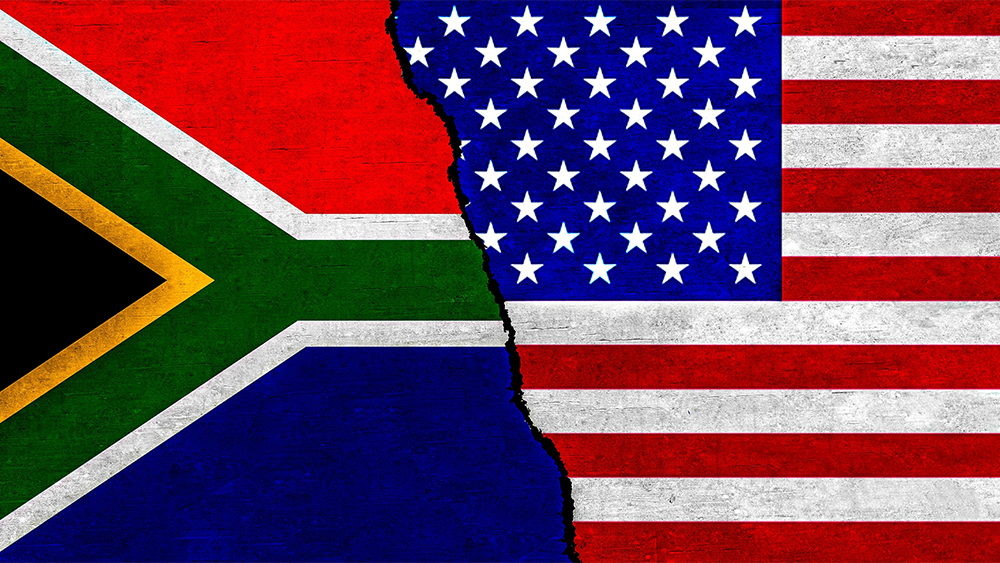
AGOA benefits have been a vital component of the South African economy. The preferential access to the US-market secures substantial employment in agriculture and manufacturing industries. Given the punitive tariffs of 30 percent imposed in August 2025 – as of late February due to the ruling of the Supreme Court replaced by 15% for 150 days with other possible measures pending – AGOA membership is at least of some temporary relief. As member of BRICS+and since taking Israel to the International Court of Justice in The Hague for the genocidal war in Gaza, the country is not in the good books of the US-administration. With the fall out over the unbased allegations of a genocide of Afrikaans-speaking White farmers, escalating in a tribunal-like encounter in the Oval Office in May 2025, South Africa’s continued AGOA membership seems hanging in the balance.
The confrontation over the G20 Summit in 2025 has added to the tense relation. As the only African member state, South Africa hosted for the first time the G20 Summit. This turned already in the first months of 2025 into the writing on the wall, signalling the new global (dis)order. The selected theme “Solidarity, Equality, Sustainability” angered the US-administration to an extent, that it boycotted the meetings. The absence even from the Summit end of October in Johannesburg assumed that it would prevent any visible outcome. But as chairperson, President Cyril Ramaphosa landed a coup in the opening session: with reference to Plinius (“Ex Africa semper aliquid novi”) he declared that there is always something new coming from Africa – and suggested the adoption of the draft document prepared over months in negotiations by the sherpas as Joint Leaders Declaration. This was promptly done so. Argentina’s Foreign Minister, who was to act as watchdog for the USA, missed to object. He distanced himself only afterwards from the document, which usually had been finally discussed and modified at the Summit. Not that the 30-page Declaration had much to offer. Statements on climate change remained non-committal and the Ukraine was not even mentioned. But it stressed at the end that, “we underscore our belief in multilateral cooperation to collectively address shared challenges.”
As Summit chairperson Ramaphosa further infuriated his colleague in the White House by insisting on protocol when it comes to passing on the responsibility for Summit preparations to the USA as the host for 2026. With reference to diplomatic protocol, the symbolic hand over of the chairperson’s gavel to the Chargé d’Affaires of the US embassy in attendance as observer at the closing session, was refused. It had to be picked up days later at the South African foreign ministry. The David versus Goliath clash culminated in a clear breach of the regulated G20 format when Washington announced that South Africa is not invited to the G20 Summit to take place on a Trump golf course estate in Florida. President Ramphosa responded: “South Africa is a sovereign constitutional democratic country and does not appreciate insults from another country about its worth in participating in global platforms.” He called on the G20 “to reaffirm its continued operation in the spirit of multilateralism”.
Notably, the EU and many other states had been vocal in support of the South African G20 framework. Like many others, a posting by the Mo Ibrahim Foundation opinionated that South Africa’s G20 presidency proved that multilateralism is alive. The country’s conduct placed Africa despite Washington’s disruptive policies firmly on the geo-politically relevant map.
An annual review in the local Sunday Tribune praised the country’s performance as a demonstration “that integrity, though tested, remained a central feature of its engagement with an increasingly volatile international order”.
South Africa under President Ramaphosa has turned into a visible advocate defending the United Nations and its Charter as global normative framework for fundamental governing principles at home and abroad. In response to the US-American attack on Venezuela, the Department of International Relations and Cooperation issued a statement to the UN Security Council meeting on 5 January, ending: “We cannot afford to proceed into a complex future without the stability and protection afforded by international law.” This implies a balancing act in midst of the deepening global divide, when multilateralism is replaced by big power multipolarity.
Two events in January 2026 illustrated the precarious “middle ground” positioning. Upon intervention of President Ramaphosa, Iran was prevented from direct participation in a BRICS+ naval exercise in South African waters. The country’s location is strategically essential for sea routes, turning the exercise into a “testing of waters” as “a stage on which competing visions of South Africa’s global role were projected and contested”. Only days later, the Chargé d’Affaires of Israel’s embassy was declared a persona non grata for “a gross abuse of diplomatic privilege and a fundamental breach of the Vienna Convention”, undermining “the trust and protocols essential for bilateral relations. SA’s sovereignty and the dignity of its offices are inviolable.”
Is South Africa a middle power?
The global shifts were spectacularly so mirrored at Davos. The geopolitical fragmentation and the growing multipolar divide motivated Canadian Prime Minister Mark Carney to a spectacular intervention. He diagnosed “the beginning of a brutal reality where geopolitics among the great powers is not subject to any constraints”. As he summarised: “We are in the midst of a rupture, not a transition.” While he advocated a kind of coalition building for middle powers, the sobering reality applies to all other countries with even less leverage even more: “if you are not at the table, you are on the menu.” Notably, Carney admitted, that the liberal order facing destruction was defined by structurally embedded asymmetric power relations characterised as much by hypocrisy as by the rules, which benefitted countries like Canada.
A litmus test in 2026 will be how the middle powers, which Carney suggests uniting in an alliance, position themselves. Will they embrace South Africa in solidarity? How will the G20 members respond to the ban issued by the USA in blatant violation of the body’s principles? But in as much as the middle powers must make decisions in building the suggested alliance of the willing, South Africa and other African countries (such as Nigeria, Egypt, Ethiopia, and Kenya) considered as the continent’s middle powers, are confronted with decisions how to position.
African countries hold a considerable proportion of resources essential for green transition and new technologies. In the face of growing competition by global actors they are confronted with a geopolitical balancing act. The dynamics unfolding deserve to be followed closely.
Henning Melber
Associate of the Nordic Africa Institute in Uppsala and an Extraordinary Professor at the University of Pretoria and the University of the Free State in Bloemfontein.
Read also
|
Uppläsning av artikel
|